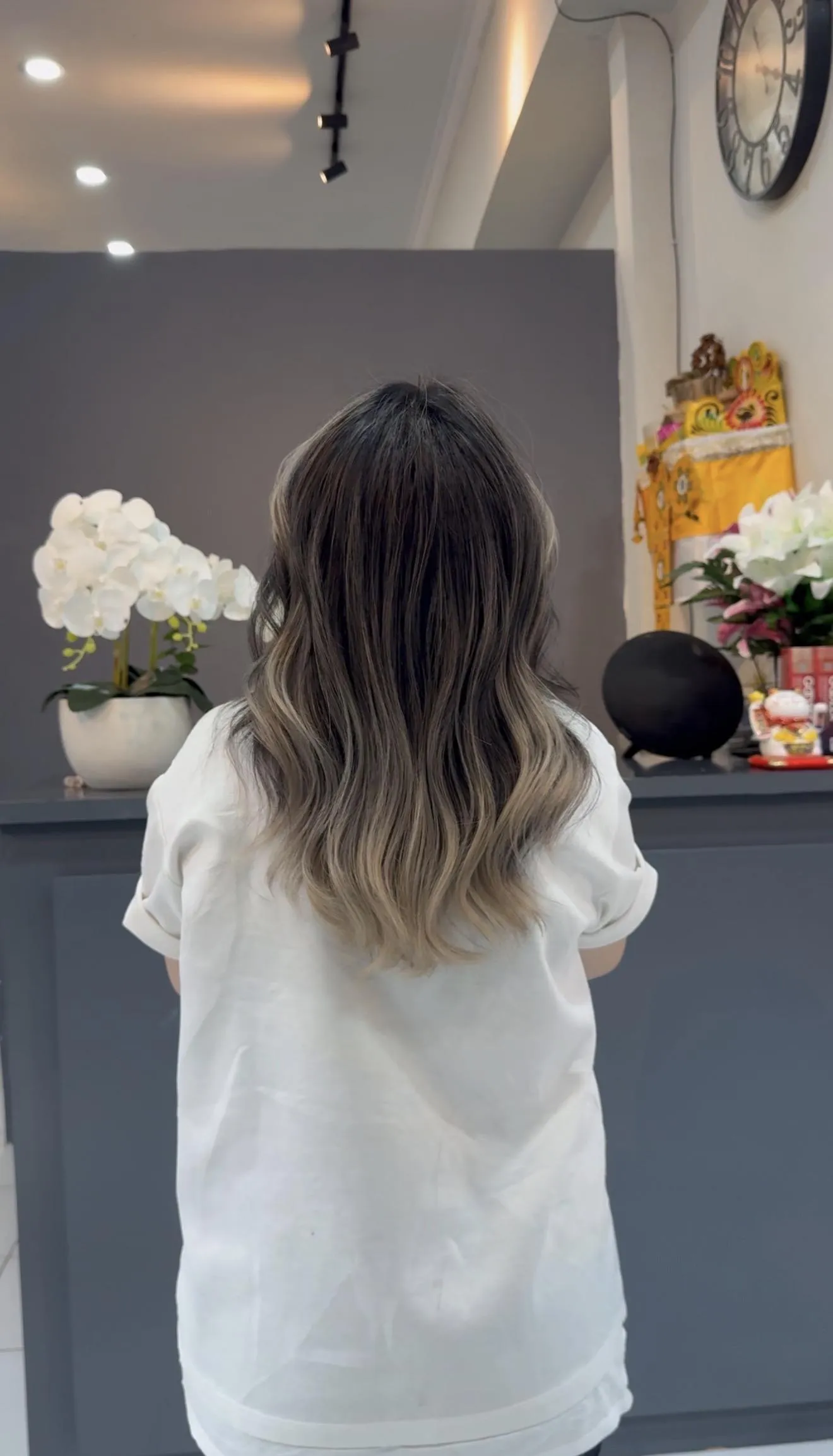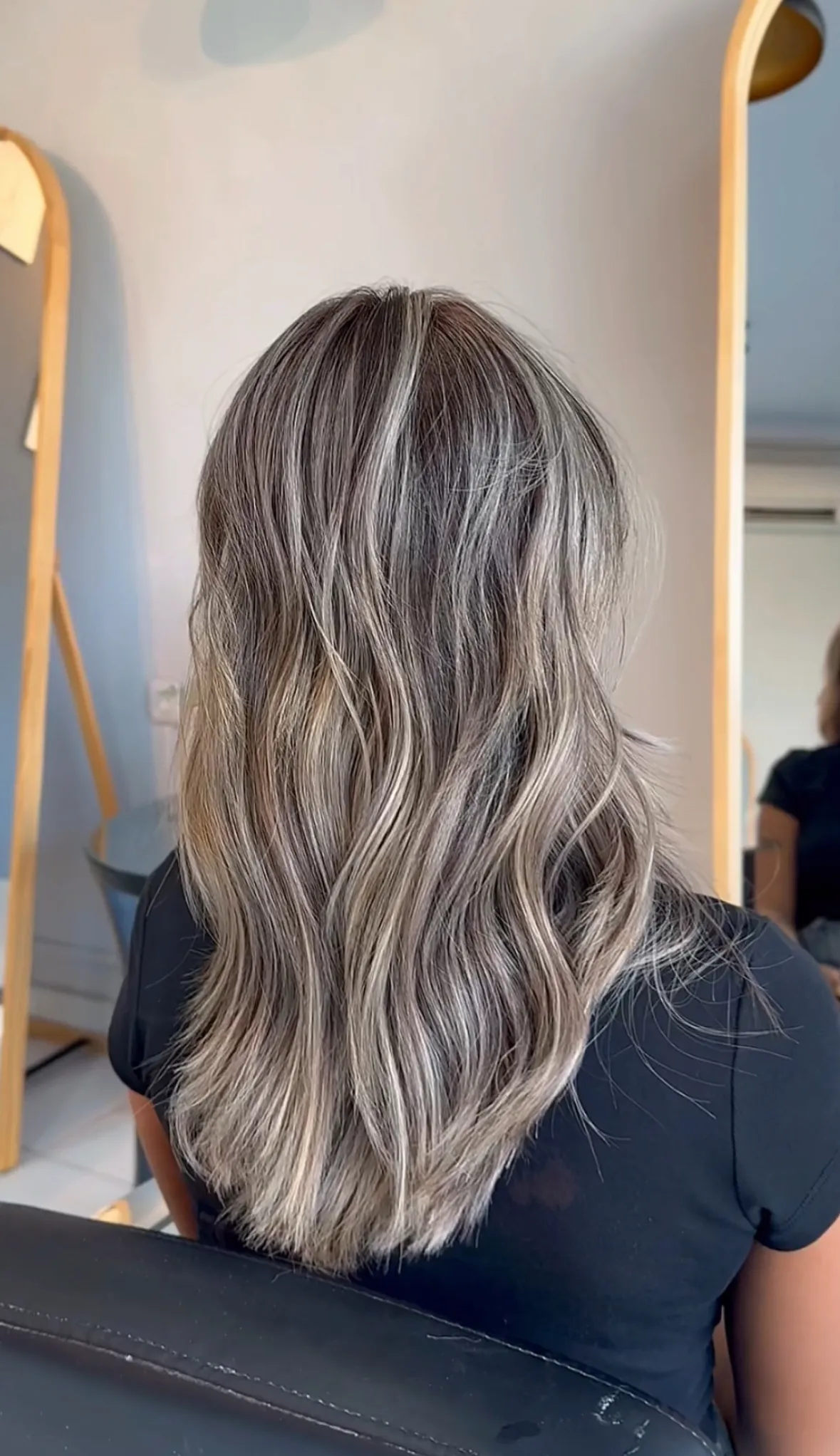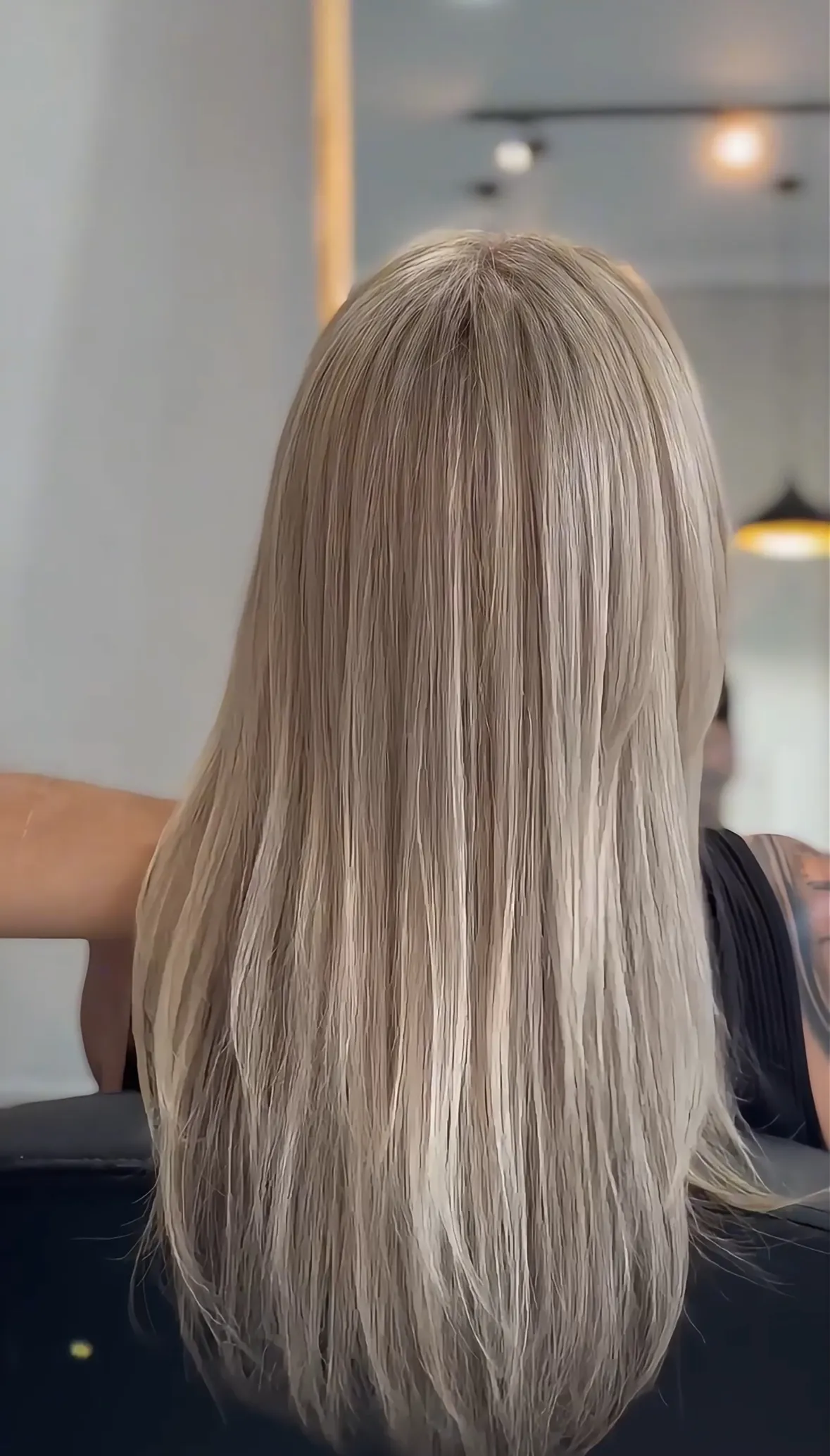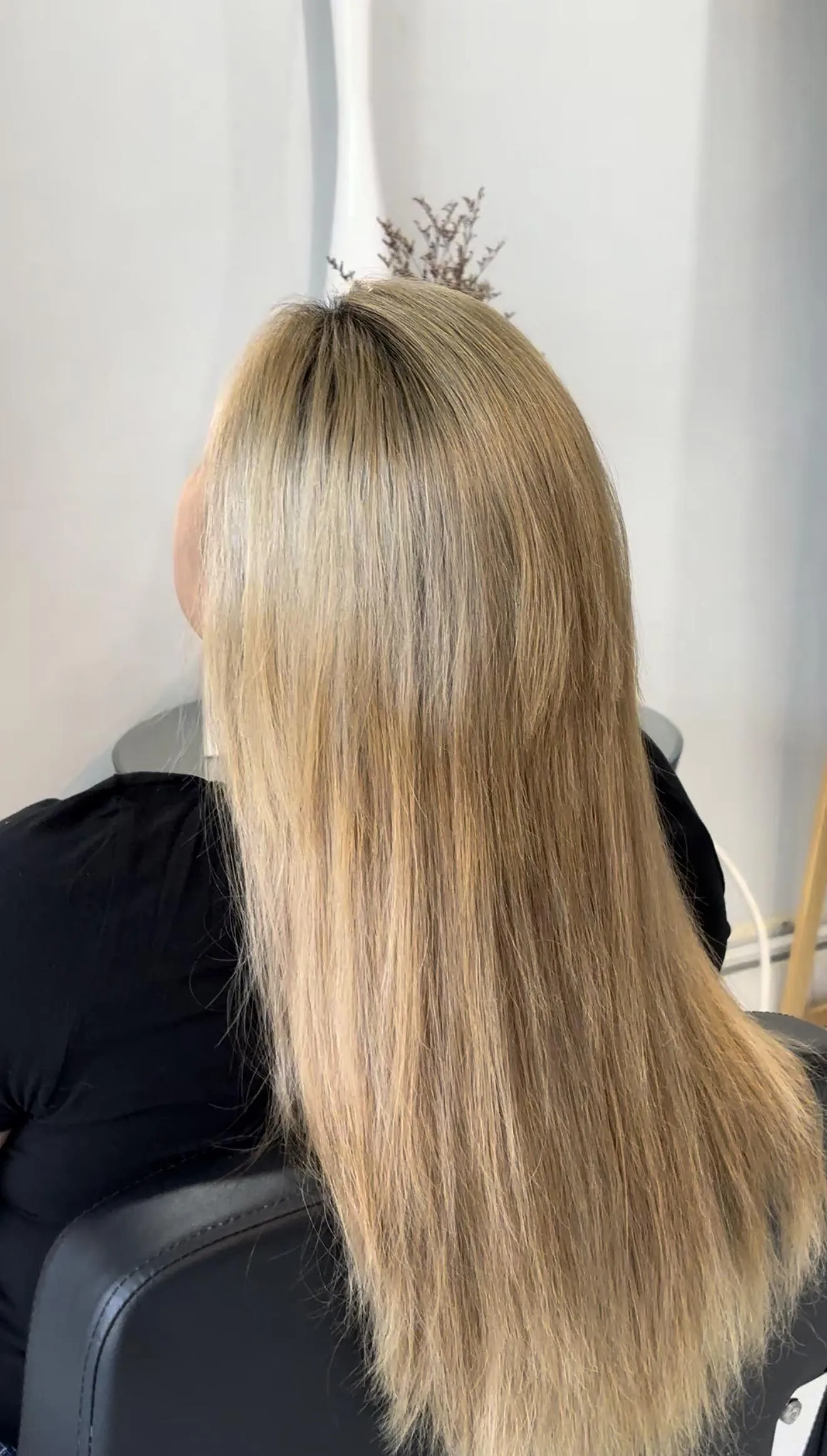
Most colour problems have solutions. Some take a single appointment. Some take several months. The important thing is understanding which you are dealing with — and that starts with an honest conversation rather than a rushed rebooking.
What Lowlights Are
Lowlights are the opposite operation to highlights. Where highlights select strands and lighten them, lowlights select strands and deepen them — weaving darker tones through lightened or over-lightened hair to restore dimension, depth, and visual complexity.
The technique is the same: sections isolated in foil, colour applied, processed, rinsed, finished. What changes is the chemistry — instead of a lifting agent, a deposit-only or slightly lifting colour is used in a shade darker than the surrounding hair.
Lowlights are most commonly needed in two scenarios. The first is over-lightening: hair that has been bleached or highlighted to the point where it looks flat, too uniform, or lacking depth. Full blonde with no darker undertones reads one-dimensionally under most lighting. Adding lowlights in a shade two to three levels deeper than the blonde gives the eye something to move between. The result looks more natural because natural hair is never perfectly uniform.
The second scenario is a gradual transition back to a darker shade. Someone who has been maintaining blonde highlights for several years and wants to move toward their natural dark brunette without a drastic cut or a single dramatic recolour can use a course of lowlight appointments to shift the overall tone progressively. Each session adds more depth, and over six to twelve months, the result shifts without looking like anything abrupt happened.
What Colour Correction Means
Colour correction is a broader category. It refers to any service aimed at resolving a previous colour result that did not achieve what was intended — or that has deteriorated significantly since it was applied.
The problems colour correction addresses are varied, but a few come up consistently.
Banding is where visible horizontal lines of different colour run across sections of the hair. It happens when multiple lightening sessions have been applied without proper overlap management, or when toner has been applied unevenly over lifted hair. The result is stripes of different tone at different points down the hair length. Fixing banding requires working section by section to even out the underlying tone before applying a consistent result on top.
Orange or brassy tones appear when bleaching has not lifted the hair far enough before toning, or when toner has faded and the underlying warm pigment is re-emerging. This is one of the most common issues on lightened hair, particularly in Bali where UV and salt exposure accelerate toner fade. The fix depends on the degree of brassiness — sometimes a fresh toner application is sufficient; sometimes a targeted re-lightening of the warmer sections is necessary first.
Patchy results from at-home colouring or an inexperienced application. Box dye and DIY lightening kits produce a range of results, few of them uniform. The hair may be darker in some sections, lighter in others, with an inconsistent cuticle condition across the head that makes re-colouring more complex than it would be on untouched hair.
Over-processed ends — where the mid-lengths and tips have been lightened repeatedly over multiple sessions while the roots have been applied to less frequently. The ends become porous, fragile, and no longer hold toner. They appear brassy or damaged even when the rest of the hair looks healthy.
The Before and After Story
The gap between what colour correction starts with and what it finishes with depends almost entirely on the severity and type of the issue, and how long it has been left unaddressed.
A fresh tonal problem — brassiness on hair that was coloured a month ago — is straightforward. A toner application in the right shade, possibly with targeted re-lightening of the warmest sections, resolves it in a single appointment.
A structural problem — over-processed ends on hair that has been lightened every six weeks for three years — is a different situation. The ends may be too porous and fragile to hold any further chemical processing at all. The realistic options might be a significant trim to remove the most compromised length, a course of bond-building and deep conditioning treatments before any colour work is attempted, and then a rebuilding of the colour from a healthier starting point.
The honest answer is that some colour problems cannot be fully resolved in one appointment. A colourist who tells you they can fix everything in a single session is either very optimistic or not assessing your hair carefully enough. Correction done in stages — allowing the hair to stabilise and recover between applications — produces better long-term results than trying to correct everything at once.
How Rose Petal Approaches Correction
Colour correction at Rose Petal begins the same way as any colour service: with a consultation. For correction specifically, this means a detailed examination of the hair's current condition and colour, a conversation about its chemical history, and an honest assessment of what is achievable and in what timeframe.
We do not promise outcomes we cannot deliver. If fixing your colour requires three appointments over six months, we will tell you that at the start rather than after the first appointment has not produced the result you wanted.
The approach depends on what the hair needs. For tonal problems — brassiness, unwanted warmth, uneven tone — we work with toners and targeted colour to correct without adding further chemical stress. For structural problems, the priority is restoring hair health before attempting to adjust colour. Bond-building treatments, deep conditioning protocols, and in some cases a strategic trim are part of the correction plan before additional processing begins.
For highlights that have grown out unevenly or need to be re-integrated into a fresh result, the correction may involve a partial full bleaching or targeted combination colouring approach rather than simply redoing the highlights from scratch.
The goal is not just to fix the current problem but to leave the hair in a better position than we found it — structurally healthier, better conditioned, and with a colour result that will grow out cleanly rather than requiring emergency correction again in three months.
Aftercare After Correction
After colour correction, the hair's care routine matters more than usual. Correction services often involve multiple chemical steps, and the hair needs time and support to stabilise.
Sulphate-free shampoo is non-negotiable — sulphates strip toner faster than anything else, and if you have just had tonal work done, aggressive shampoo will undo it within weeks. Weekly deep conditioning treatments restore moisture to hair that has been through an intensive correction process. Bond-building at-home serums — used between washes — continue the structural repair that started with in-salon treatments.
For clients in Bali, managing the tropical environment is a specific concern after correction. UV exposure accelerates toner fading, which means a freshly corrected result can start shifting again within weeks if sun protection for the hair is not part of the routine. Salt water is particularly damaging on hair that is still recovering, and it should be avoided or carefully managed in the weeks immediately following a correction appointment.
Choosing the right single process colour maintenance schedule after correction helps prevent the problem from recurring. Many correction cases happen because maintenance appointments were delayed — toner faded and the underlying brassy tone was left to oxidise further over months rather than being refreshed every six to eight weeks.
For help choosing the right salon for any colour service in Bali, including knowing what questions to ask and what to look for, see the guide on how to choose a beauty salon in Bali. And for a full overview of what Bali's beauty scene offers beyond hair, the Bali beauty guide has everything in one place.
Rose Petal is a beauty center on Jalan Labuansait in Uluwatu offering colour correction, lowlights, highlights, and advanced hair colouring services daily from 10 AM to 7 PM — with a lounge bar, sunset terrace, and co-working space. To book your appointment, visit rosepetalbali.com or message us on WhatsApp.
Beauty, refined.